




Being PFAS-free is no longer enough. Performance is what makes the difference.
July 19, 2026
Everyone is talking about cleaning drones. Almost nobody talks about the liquid.
August 1, 2026PFAS-free Liquid Glass Coatings: Why performance will define the future
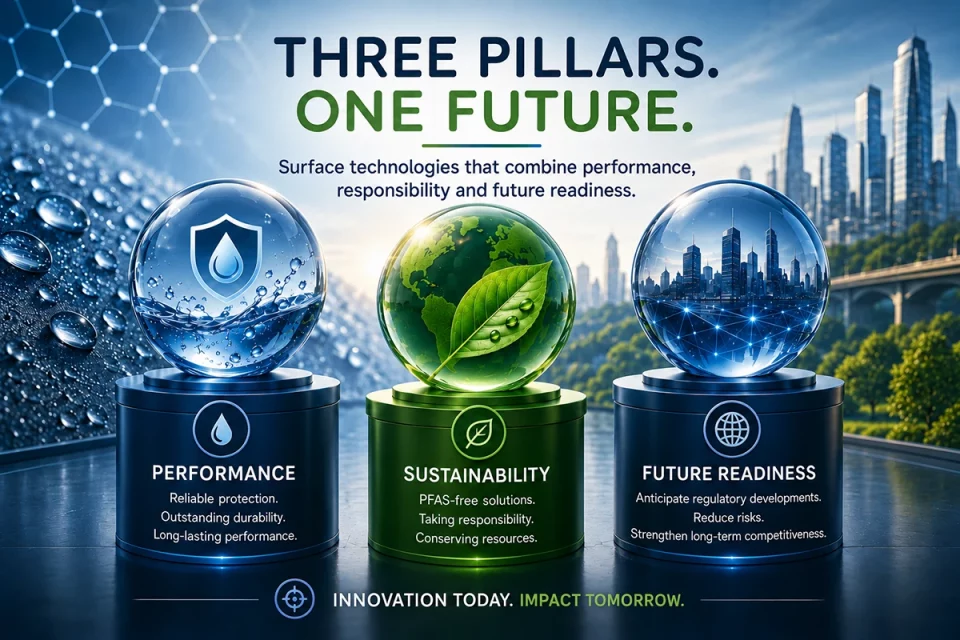
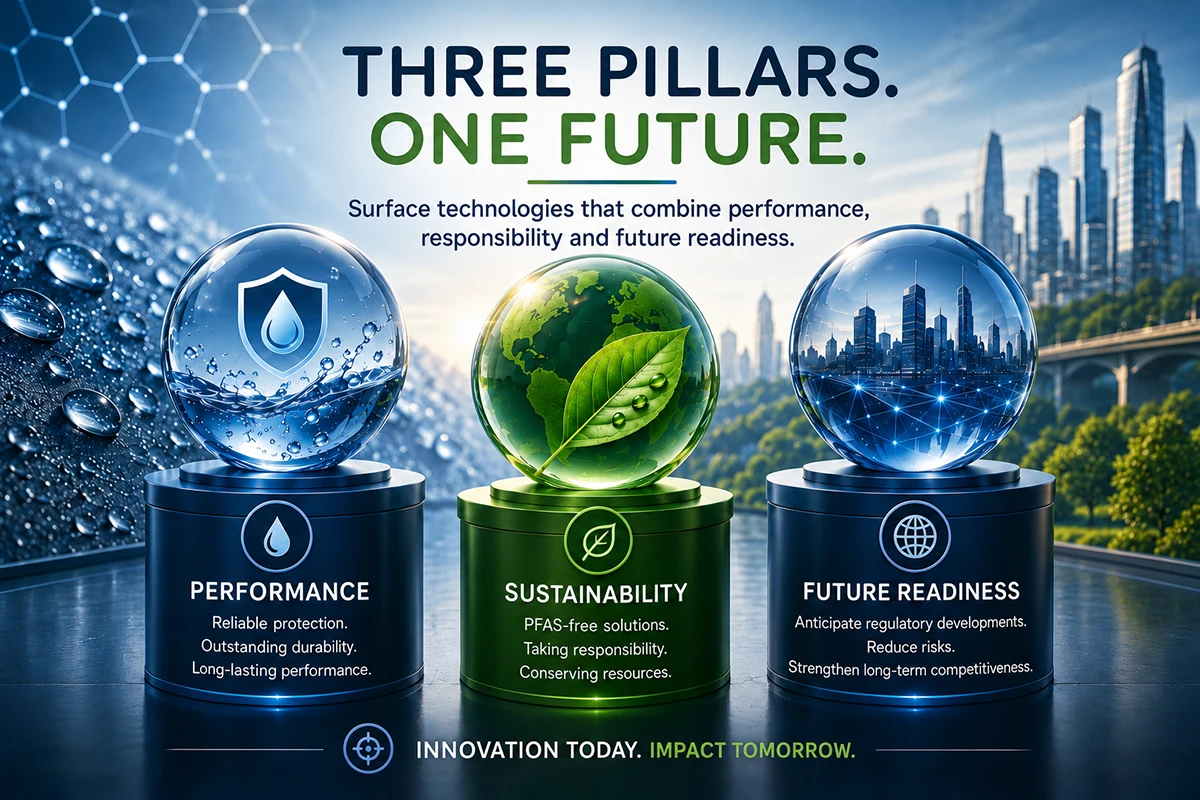
Our position
At CCM, we do not view PFAS solely as a regulatory challenge. For us, the development of PFAS-free high-performance coatings is above all an opportunity to rethink surface technologies and create solutions that combine performance, durability and long-term sustainability.
Our goal is not simply to eliminate one group of substances. Our goal is to develop better technologies.
For decades, the development of functional coatings followed a simple principle: technical performance came first. Water repellency, chemical resistance, durability and cost-effective application were the key requirements. PFAS-containing chemistries are still used in many applications today because, depending on the substance and application, they can provide unique technical properties.
The coatings industry is in a time of transformation
The discussion around PFAS is no longer purely a chemical issue. It increasingly influences product development, material selection, supply chains, sustainability strategies and long-term investment decisions. At the same time, regulatory frameworks continue to evolve worldwide, while many companies are already aligning their products and supply chains with future market expectations.
Regulatory developments, together with the expectations of many international markets, point in the same direction: products are expected not only to deliver outstanding performance, but also to meet evolving customer and regulatory requirements over the long term.
The challenge
Developing high-performance PFAS-free alternatives is one of the most demanding development tasks in modern surface chemistry. A modern high-performance coating must perform reliably without PFAS. Depending on the application, different performance characteristics take priority—from outstanding water repellency and high chemical resistance to durability and efficient application. Certain applications also require oil-repellent properties. Ultimately, what matters is that the coating consistently fulfills the functional requirements of its intended application.
Evaluating a coating solely by its chemical composition therefore falls short.
The key question is not: “Is the coating PFAS-free?”
But rather: “Does the PFAS-free coating consistently meet the technical requirements of its intended application?”
In our view, this question will define the success of the next generation of surface technologies.
Innovation means more than substitution
At CCM, we are not developing PFAS-free Liquid Glass coatings simply as a short-term response to regulatory developments. We have been investing in fluorine-free technologies for many years because we believe that high-performance, sustainable and future-ready coating systems represent the future of surface technology.
For us, innovation is not about replacing one substance with another. Innovation means advancing the technology itself. Every new formulation must not only meet regulatory expectations but, above all, satisfy the functional requirements of its intended application.
Based on this philosophy, we have built a continuously expanding portfolio of PFAS-free Liquid Glass coatings. Today, 28 of our current 43 Liquid Glass coating systems are already completely PFAS-free, while we continue developing additional fluorine-free high-performance technologies with the objective of continuously improving performance, quality and durability.
Future readiness starts today
Companies develop products not only for today's market, but for the years ahead. Material decisions therefore influence far more than surface performance. They affect product strategies, international supply chains, regulatory compliance, sustainability goals and long-term investment security. Many companies are already aligning their development strategies with foreseeable regulatory and market developments.
Forward-looking innovation creates planning security.
A principle that guides our development
“Regulation does not create innovation. It accelerates the adoption of innovations that already exist.”
Companies that invest in new technologies early are often better positioned to integrate future requirements into their development processes than those that wait until regulatory change becomes mandatory.
Our commitment
CCM will continue investing in high-performance PFAS-free Liquid Glass technologies that combine functionality, durability and sustainability.
We are convinced: The future of surface technology will not be defined by what a coating excludes. It will be defined by what it achieves. That is why we do not simply develop PFAS-free coatings. We develop the next generation of high-performance Liquid Glass technologies.